

Maximizing Meta Spend Is Facebook or Instagram Driving Higher ROI

Marketing teams constantly face a familiar dilemma: where should the ad budget go? One media buyer leans heavily on Facebook’s lead pipeline. Another argues that Instagram’s short-form video formats yield superior conversion rates. carguments hold truth, but both also overlook a massive evolution unfolding deep within Meta’s advertising ecosystem today.

This breakdown clarifies the functional differences between Facebook and Instagram ad channels in 2026, explains why choosing between them is a flawed approach, and offers a framework to align your budget with actual buyer behavior.

The Short Answer Matching Platforms to Business

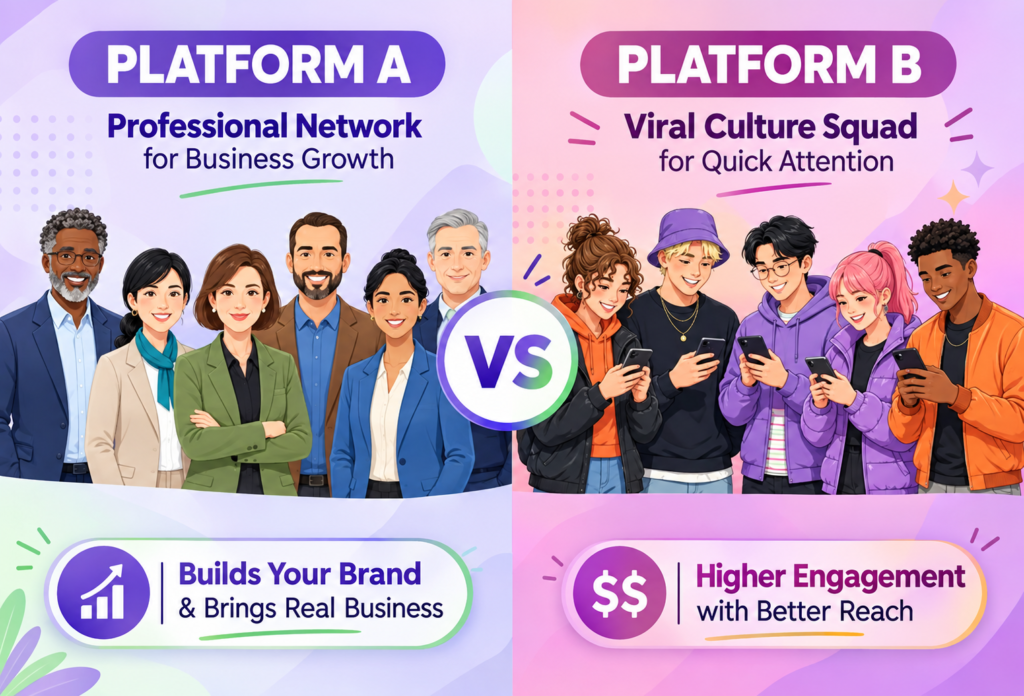
Goals Facebook remains the undisputed leader for complex lead generation, professional services, and mature consumer demographics. Instagram dominates for aesthetic product discovery, Gen Z and Millennial buyers, and viral brand engagement.

However, the industry’s best-kept secret is simple: Meta’s system is designed to eliminate this choice. The platform relies on machine learning to automatically distribute your assets across both ecosystems based on live auction costs, often blending your budget across networks behind a single campaign window.

To win in 2026, you must stop comparing app names and start analyzing how your audience interacts with specific formats.

The Shift Toward Unified Delivery Ecosystems

The concept of isolated platform campaigns is rapidly disappearing due to Advantage+ placements. This automated distribution tool tests your ad sets across Facebook, Instagram, Messenger, and the Audience Network simultaneously, instantly prioritizing the lowest-cost opportunities. Meta’s internal performance data indicates that accounts leveraging automated placements experience an average cost-per-acquisition (CPA) drop of roughly 12%.

This efficiency is exactly why manual placement filtering has become an uphill battle for media buyers. If you are asking whether to launch on Facebook or Instagram, you are asking the wrong question. For most modern ad accounts, your budget is already fluidly moving between both platforms based on Meta’s real-time calculations.

The true variable is your creative asset type. Meta’s delivery system can shift your cash from a Facebook feed to an Instagram story in a millisecond, but it cannot fix a boring video or rewrite a caption to fit a fast-paced environment. Your creativity dictates your placement success.

Why Facebook and Instagram Are Still Not The Same Platform

Automation can handle where your ads are placed, but it cannot change how people actually use these platforms. The real differences in users and their mindset are still there, and they still decide your entire marketing plan.

How People Behave Differently on Each Platform

Facebook has a much wider and more mature audience. Users here spend more time reading, understanding, and trusting an offer before they buy. If your product needs more explanation and trust to sell, Facebook’s audience will give you that time.

Instagram is more about quick visual discovery and has a younger audience. If your product sells only when people can see it, like clothes, food, fitness, or home decor, Instagram’s design naturally works better for you.

The Truth About Ad Costs on Both Platforms

Facebook usually gives you a cheaper cost-per-click because it has more ad space and a larger audience. Instagram is often a bit more expensive, especially in niches like beauty and fashion, because the competition for visual spots is very high. But this is not fixed. Your real cost will always change based on your industry, your ad creative, and the season.

Ad Types and What Users Actually Want to Do

Facebook :is still better for direct-action ads. It performs best for lead forms, multi-product carousels, and longer text that helps people make a decision.Instagram :is built for stopping the scroll. It performs best with Stories, Reels, and Explore ads that are made for fast, eye-catching visuals instead of long reading.

In the end, no platform is better than the other. They are just made for different steps in the buying journey.

Your Business Deserves More Than Just Traffic

We build strategies that actually bring customers, not just clicks.

Let’s create a plan that gets you leads, sales, and results you can measure.

The Hidden Tracking Flaw That Ruins Your ROI Comparison

This is the part almost every Facebook vs Instagram comparison article ignores: the ROI numbers you are trusting to make a decision might be completely inaccurate from the start.

 Tracking Transparency update, every iPhone user can block cross-app tracking with a single click – and over 75% of them do. Because of this, your Meta Pixel, which is responsible for tracking all your sales and leads, is now missing a huge chunk of real conversions. So the Facebook and Instagram ROI you see in Ads Manager is often much lower than your actual results.

The only real fix Meta has given is the Conversions API (CAPI). Unlike the Pixel, CAPI is a direct server-to-server connection that sends your website’s sales data straight to Meta, bypassing all browser and iOS blocks. If you are trying to decide between Facebook and Instagram ads without setting up CAPI with your Pixel, you are comparing incomplete data. Always fix your tracking setup first before you trust any platform comparison.

How to Make The Right Choice Without Guessing

Forget the endless debate. Follow this practical framework instead:

  • Start with your real goal: A lead form fill and an online purchase need completely different strategies. Decide your main conversion event first, because that alone decides which platform and creative will work best for you.

  • Fix your tracking before spending: Install and configure the Conversions API (CAPI) alongside your Meta Pixel from day one. If your data is not clean and complete, any decision you make about ROI will be wrong.

  • Let automation work for new accounts: If you are starting fresh or have low data, enable Advantage+ Placements. This lets Meta’s AI find the cheapest and most efficient spots for your ads while you collect real performance signals.

  • Create native creative for each placement: Don’t use one image for everything. Make a 9:16 vertical video specifically for Reels and Stories, and a separate high-quality static or carousel ad for the Feed. Each format needs its own design.

  • Check results by placement, not just campaign: In Ads Manager, always break down your performance by placement. This report shows you exactly whether Facebook Feed, Instagram Reels, or Stories is actually driving your sales, even when you run an automated campaign.

Which Platform is Best for Your Business Niche?

General advice doesn’t work for everyone. Here is a practical breakdown based on your actual industry:

Business Type

Recommended Platform

Reason Why It Works Better

B2B Services & Agencies

Facebook

Reaches older, decision-maker audience and performs better for detailed, long-form lead generation content.

Home Services (HVAC, Plumbing, Roofing)

Facebook

Core homeowner audience is 35-55 years old, which perfectly matches Facebook’s active user base.

Fashion, Beauty & Lifestyle eCommerce

Instagram

Highly visual platform that drives impulse buying and product discovery through Reels and Shopping.

Matrimony & Relationship Services

Both – Depends on Age

Gen Z and younger users engage more on Instagram, while parents and family decision-makers are more active on Facebook.

B2B Product Selling (eCommerce)

Mainly Facebook + Instagram Support

B2B buyers do heavy research before buying, and Facebook’s detailed ad format supports that journey better.

Local Businesses & Services

Facebook

Built-in lead forms and precise geo-targeting help keep your cost-per-lead very low.


Frequently Asked Questions

Which platform gives higher ROI - Facebook or Instagram?

There is no single winner. Facebook generally gives better ROI for direct purchases, retargeting, and lead generation because its audience is older and ready to buy. Instagram gives higher ROI for brand discovery, engagement, and fashion/beauty products where visual appeal drives impulse buying. The best ROI comes from using both and checking your placement breakdown in Ads Manager.

Since Apple's iOS 14 update, most iPhone users block tracking. Your Meta Pixel misses a lot of real sales and leads, so your Ads Manager shows lower ROI than reality. To fix this, you must set up Conversions API (CAPI) with your Pixel. CAPI sends data directly from your server to Meta and recovers almost all the lost tracking.

Yes, usually. Instagram CPM (cost per 1000 views) is 15-30% higher than Facebook because its audience is younger and more engaged. But higher cost doesn't mean lower ROI. If your product is highly visual like fashion, beauty, or lifestyle, that premium engagement on Instagram often converts into more sales and a better overall ROAS.

B2B services, home services like HVAC, roofing, plumbing, and local service businesses should lean towards Facebook. The reason is simple - the decision-makers and homeowners are mostly 35-55 years old and they are far more active on Facebook. Facebook also supports long-form content and native lead forms which work best for these industries.

Stop guessing. First, define your main goal - lead or sale. Second, fix your tracking by installing CAPI before you run any ads. Third, run Advantage+ Placements for 2 weeks to let Meta find the cheapest results. Finally, go to Ads Manager > Breakdown > By Placement and see which platform is really driving results. Re-check this every 30-60 days and move your budget to the winner.

Our mission is to support growing businesses by delivering tailored solutions that boost performance and increase profit margins.

Copyright © 2026 fastdigitpro | Powered by fastdigitpro